
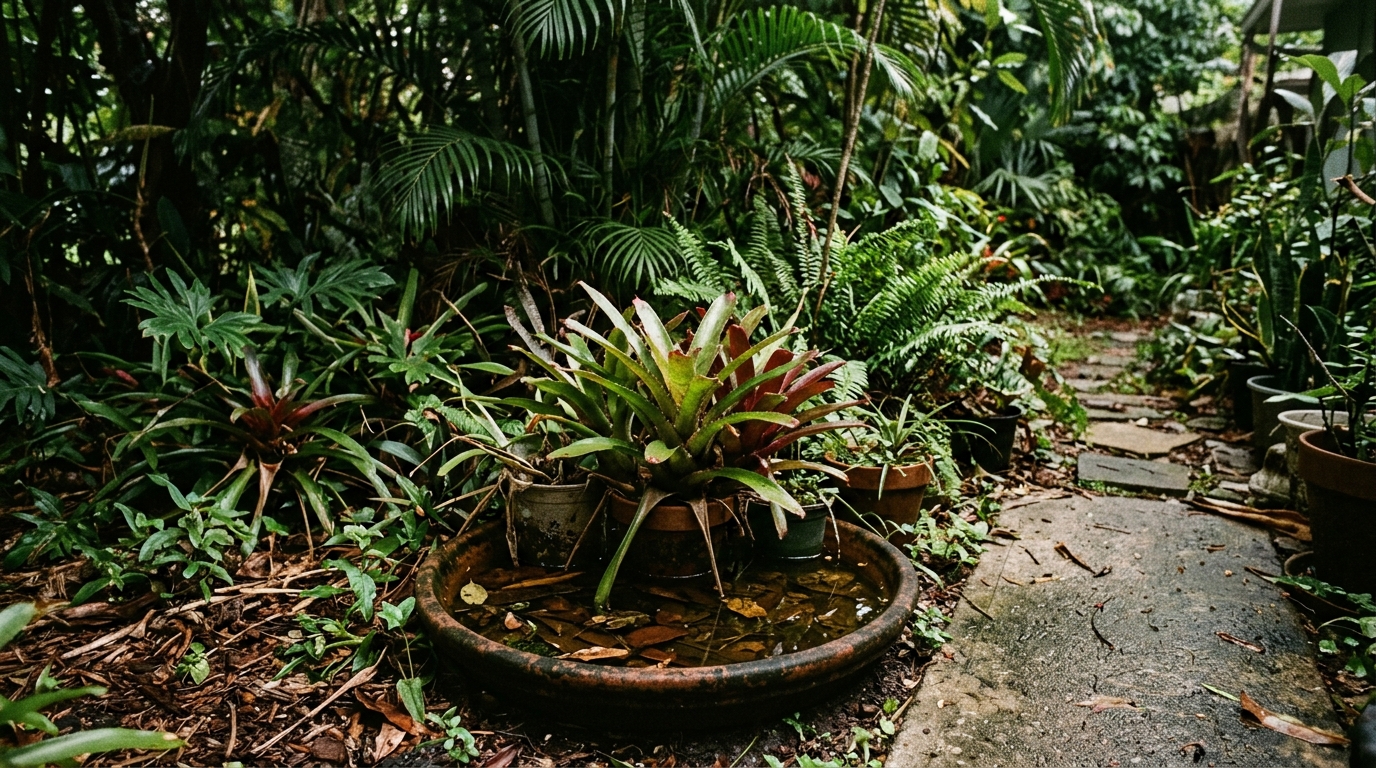
What we treat, and where.
- Treatment of resting harbourage — the underside of foliage, dense shrubs, shaded fence lines
- Breeding site survey: bromeliads, plant saucers, gutters, bins, tarps, boat covers
- Larvicide where standing water cannot practically be removed
- Perimeter and entry points so they stop following people inside
- Repeat coverage on the rotation, which is what actually holds it down
- Bromeliads and other plants that hold water in the leaf axils
- Plant saucers, bird baths and anything left out after rain
- Blocked gutters and the low spot in a flat roof
- Bin lids, tarps, boat and grill covers, and the tray under an AC unit
A bottle cap is enough
Aedes mosquitoes, the ones that bite during the day and carry the diseases people worry about, will breed in a bottle cap of water. This is why a treatment-only approach fails: you can kill every adult on the property and have a fresh generation in a week from a plant saucer nobody emptied. We survey the water first and tell you what to tip out.
See it again? We come back free.
Covered pests are included in your service plan. If something turns up between visits we come back and re-treat at no extra charge. New customers take $50 off the initial service.
Straight answers.
How long does a treatment last?
Expect meaningful relief for several weeks, less after heavy rain. That is why it runs on a rotation rather than as a one-off.
Is it safe for pollinators?
We treat resting harbourage rather than flowering plants, and we time applications to limit exposure. Tell us if you keep a pollinator garden or hives and we will work around it.
Send us a photo and we will tell you what it is before we quote you anything.