
What we treat, and where.
- Identification first — paper wasp, yellowjacket, hornet, carpenter bee or honey bee
- Nest removal from eaves, soffits, sheds, playground equipment and signage
- Void nests in wall cavities and roof spaces, treated then sealed
- Carpenter bee treatment plus sealing of the galleries they bore
- Honey bee colonies referred to a keeper for live relocation
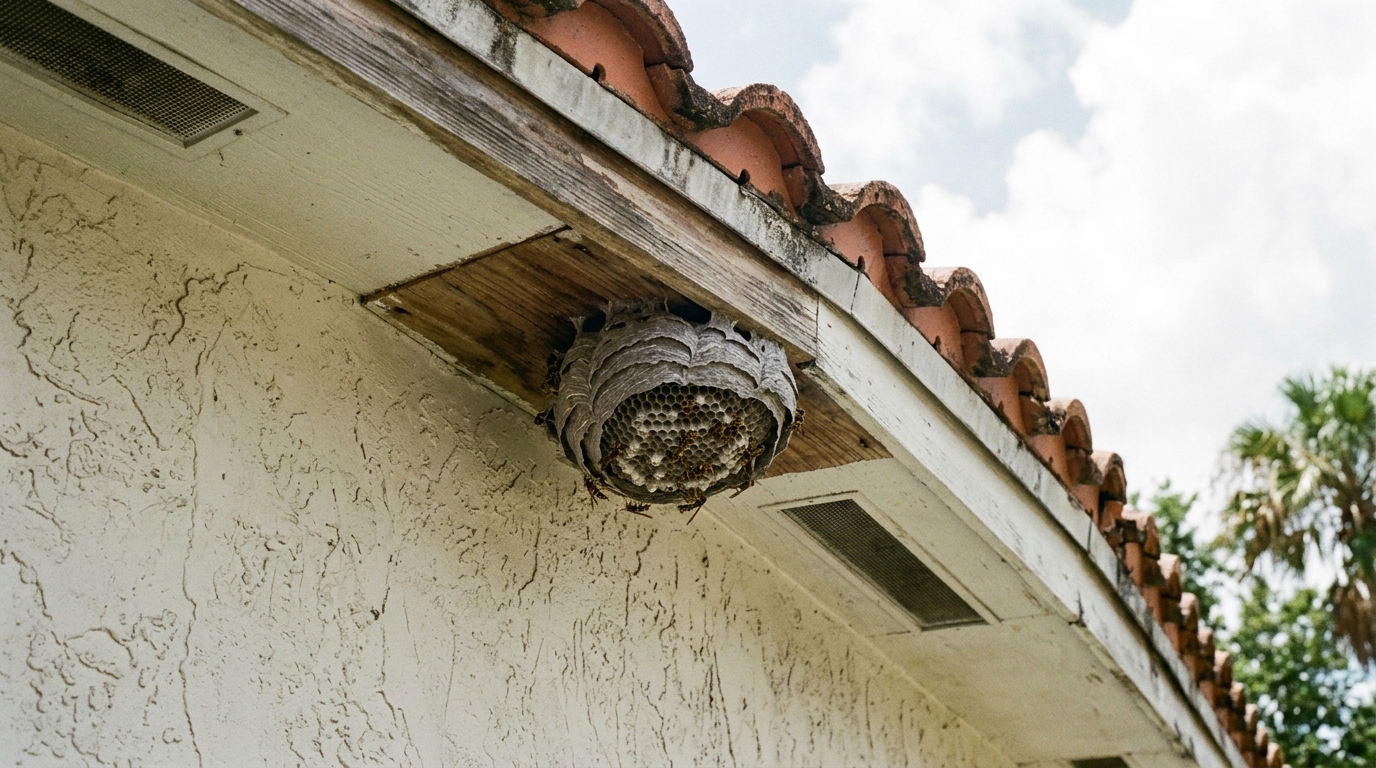
- An open grey papery umbrella nest under an eave — paper wasps
- A large enclosed football-shaped nest — hornets, and worth leaving alone
- Heavy traffic in and out of a single small hole in the soffit — a void nest
- Perfectly round holes in bare timber with sawdust below — carpenter bees
Why we do not kill honey bees
Honey bees are worth relocating and there are keepers who will take them. Killing a colony inside a wall also leaves the comb and honey behind, which then ferments, stains through the drywall and attracts everything else. Removing the colony properly is the cheaper outcome even before you count the bees.
See it again? We come back free.
Covered pests are included in your service plan. If something turns up between visits we come back and re-treat at no extra charge. New customers take $50 off the initial service.
Straight answers.
Can I knock the nest down myself?
You can, and every year people get badly stung doing it. Yellowjackets and hornets defend aggressively and a void nest is far larger than the entrance suggests.
What if it is in a wall?
That is a different job to a nest under an eave. We treat, then close the entry so the cavity does not get reused next season.
Send us a photo and we will tell you what it is before we quote you anything.